Search for almost anything and the internet will give you an answer.
Looking for a consultant? Search.
Looking for a mentor? Search.
Looking for someone with a particular skill or experience? Search.
For many things, that works remarkably well.
But when the decision actually matters, something changes.
Finding people is not always the same as finding the right person.
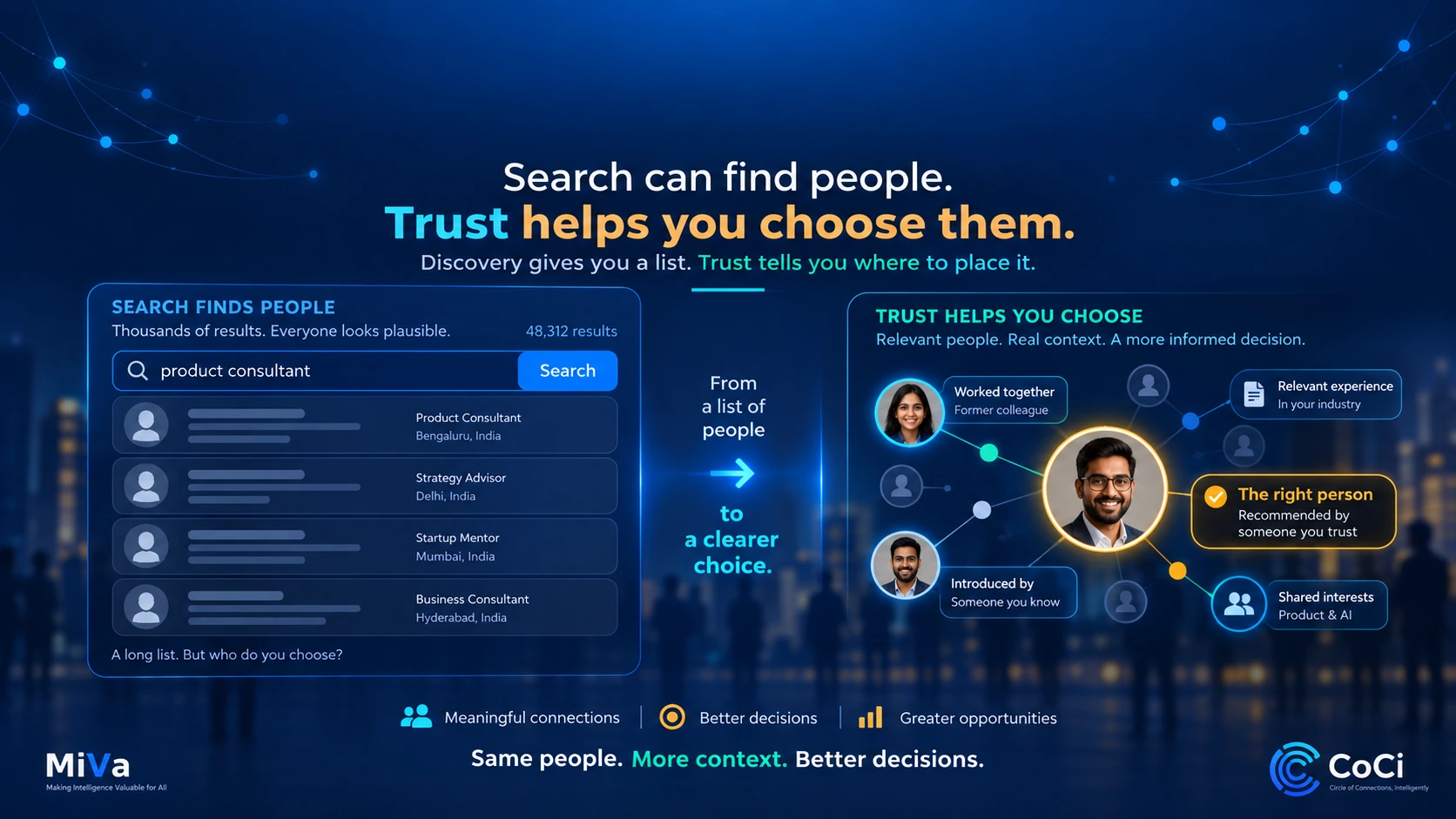
Search is good at giving you options
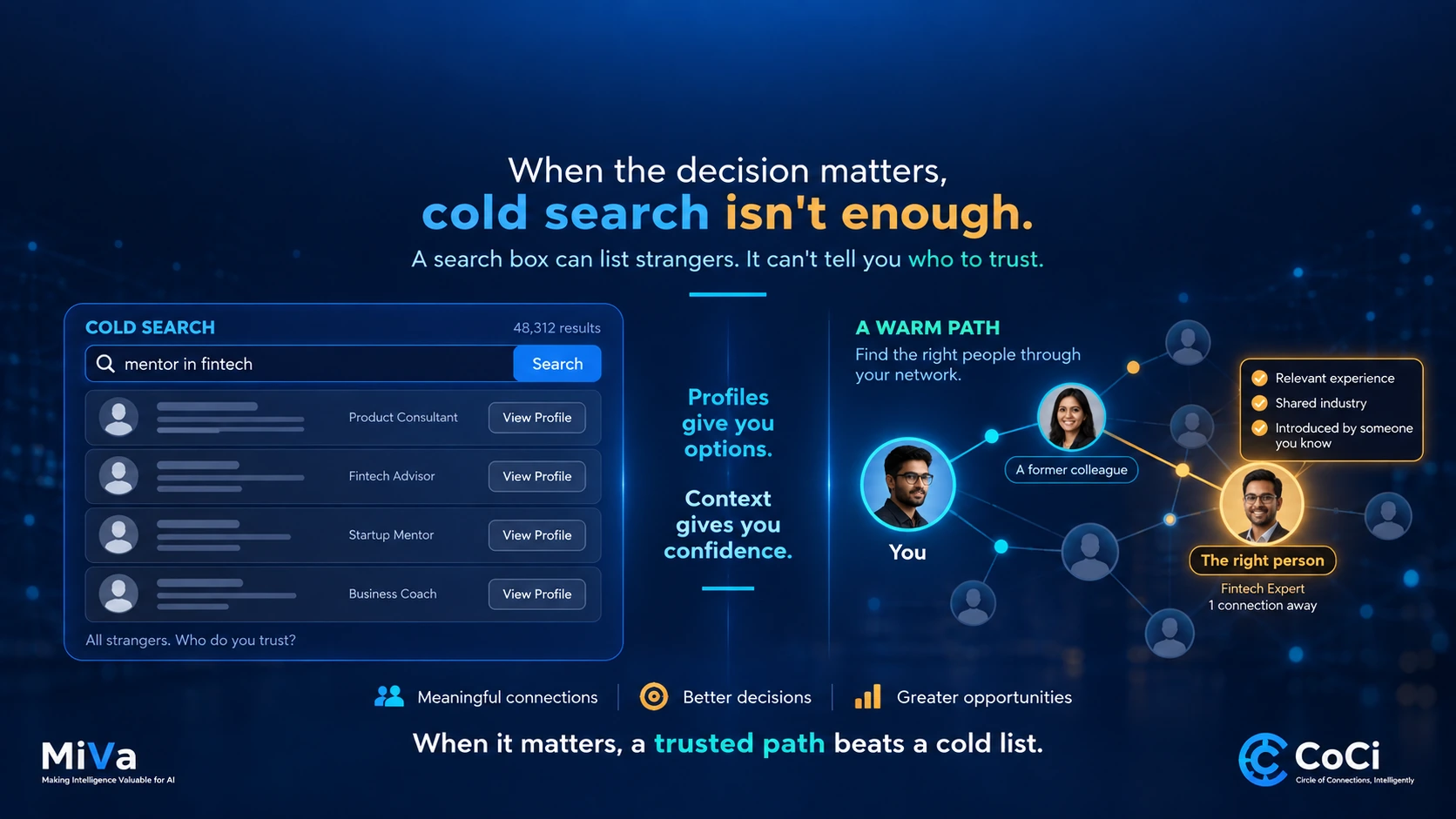
Cold search starts with no relationship between you and the people you find.
You type a query, browse profiles, compare experience, read descriptions and create a shortlist. This is useful because it gives you access to a much larger pool of people than you could ever know personally.
The problem is not search itself.
The problem is what happens after the search.
You may find fifty people who appear suitable. But which one is actually relevant to your situation? Who has experience that matches your specific need? Who do you have something in common with? Who might be easier to approach? Who can you learn more about through someone you already know?
Search gives you options. It does not automatically give you context.
Important decisions are rarely just search problems
Think about the last time you needed someone for something important.
Maybe you were looking for a mentor, considering a professional for a project, exploring a new career direction or trying to find someone who could help with a difficult business problem.
You probably did not want just a name.
You wanted confidence that the person was relevant.
That is a different problem.
When the cost of making the wrong choice is high, people naturally look for additional signals. They ask friends. They check with colleagues. They look for recommendations. They try to understand the person's background and reputation.
We have been doing this offline for a very long time.
Why a warm path can feel different
Imagine two professionals with similar profiles.
You find Person A through a search. Their experience looks good, but you know nothing else about them.
You discover Person B through someone you already know. Your former colleague has worked with them and can give you some context.
Person B is not automatically the better choice.
But the second situation gives you somewhere to start.
You know there is a relationship behind the discovery. You have another person who may help you understand the context. You can ask better questions before making a decision.
The difference is not simply who you found. It is what you know around the person you found.
The internet often hides the relationships that could help
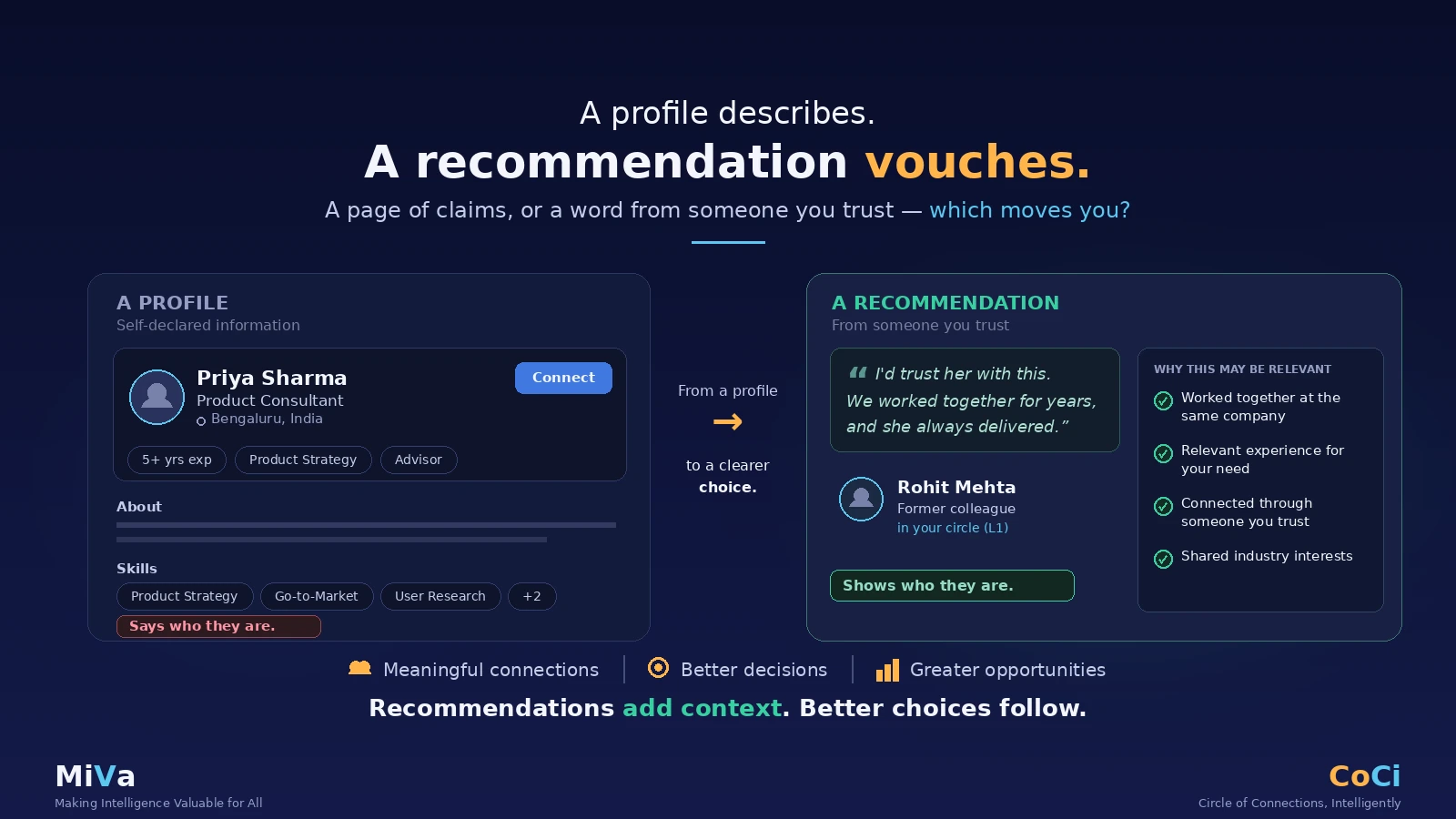
Most digital discovery experiences are built around profiles.
You see a person, their experience, their interests and perhaps their connections. But the information that may be most useful for your decision can sit somewhere else entirely.
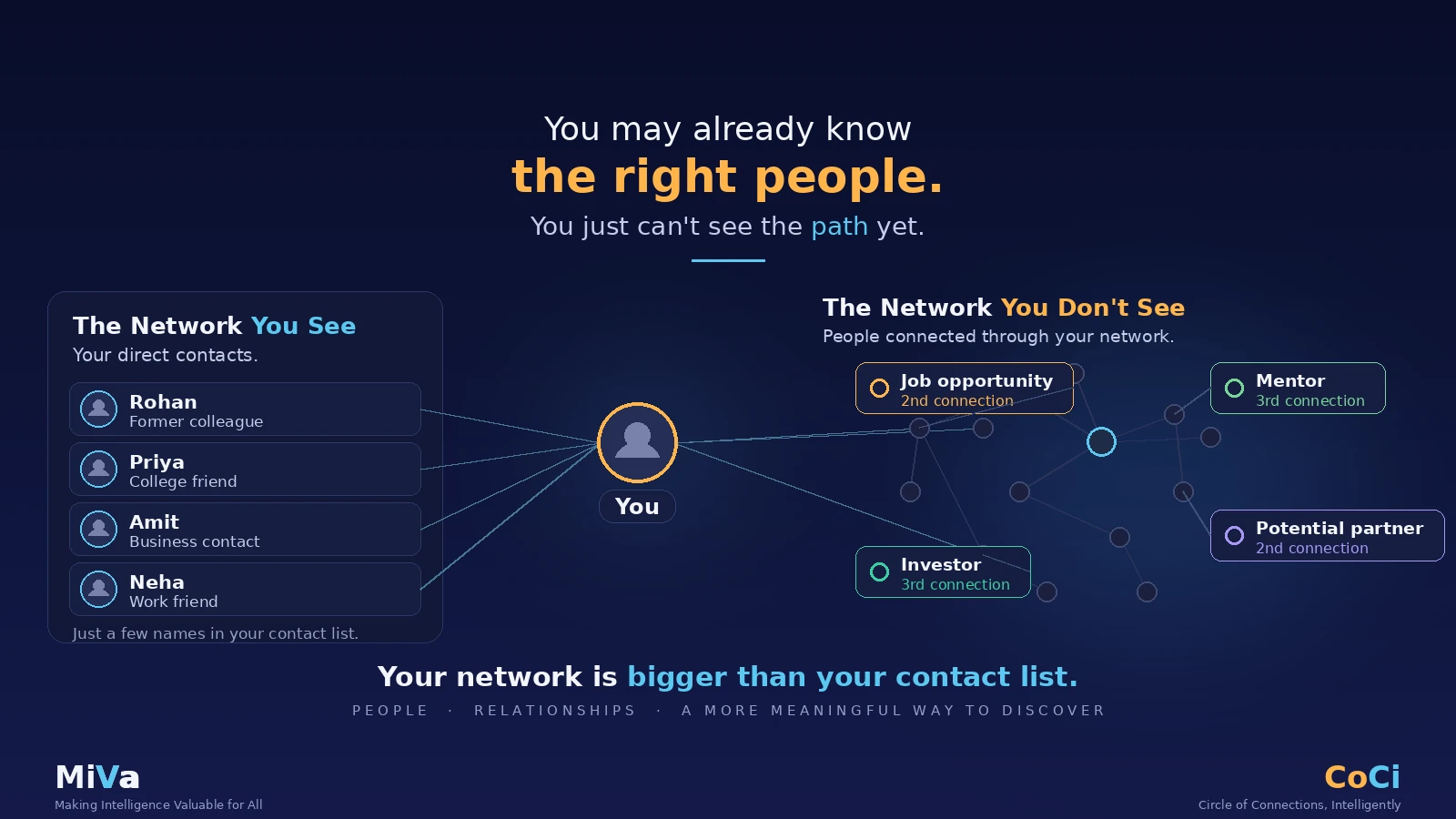
It may exist inside your contact list. In a former workplace. In an alumni group. In an old conversation. Or simply in the relationships of people you already know.
Your network may already contain someone relevant, but you may have no practical way to discover that connection when you need it.
This is the hidden problem behind cold search.
The search space is huge, but the useful context is scattered.
This is where CoCi takes a different approach
This is one of the ideas behind CoCi (Circle of Connections, Intelligently) by MiVa AI Systems.
CoCi is built around relationship-based people discovery rather than treating every search as a completely cold search.
The current experience supports relationship-based discovery across relationship scopes including L1, L3 and Global. That means the discovery experience can include relationship context rather than presenting people as isolated profiles.
The goal is not to say that everyone in your network is trustworthy, or that every relationship leads to the right outcome.
The goal is simpler:
Make the relationship path visible so you have more context when deciding who to explore.
Cold search will always have a place
There is nothing wrong with discovering someone you do not know.
Sometimes the person you need is outside your current network. Search is one of the best tools we have for finding possibilities that would otherwise remain invisible.
But important people decisions often need another layer.
Search can tell you who exists.
Relationship context can help you understand where that person sits relative to you.
And that can make the next step more informed.
The future of people discovery may not be search or networks. It may be search with context.
Curious about what CoCi can do today and what we're building next? See how CoCi is evolving →
Explore CoCi and discover a more context-aware way to find people.